
What is gnocchi made from? Classic potato gnocchi contain cooked potato, wheat flour and salt, and some recipes also include egg. The balance between those ingredients matters. A wet mash needs more flour to form a workable dough, which can give the dumplings a firmer bite, especially when making gnocchi. The name also covers dishes with a completely different base. Rome’s gnocchi alla romana, for example, are made with semolina and baked in the oven. For diners and home cooks, the ingredients offer the first clue to how the gnocchi will be cooked, how they will feel, and which sauces will suit them, particularly when using fluffy potatoes.
What Is Gnocchi Made From in a Traditional Potato Recipe?
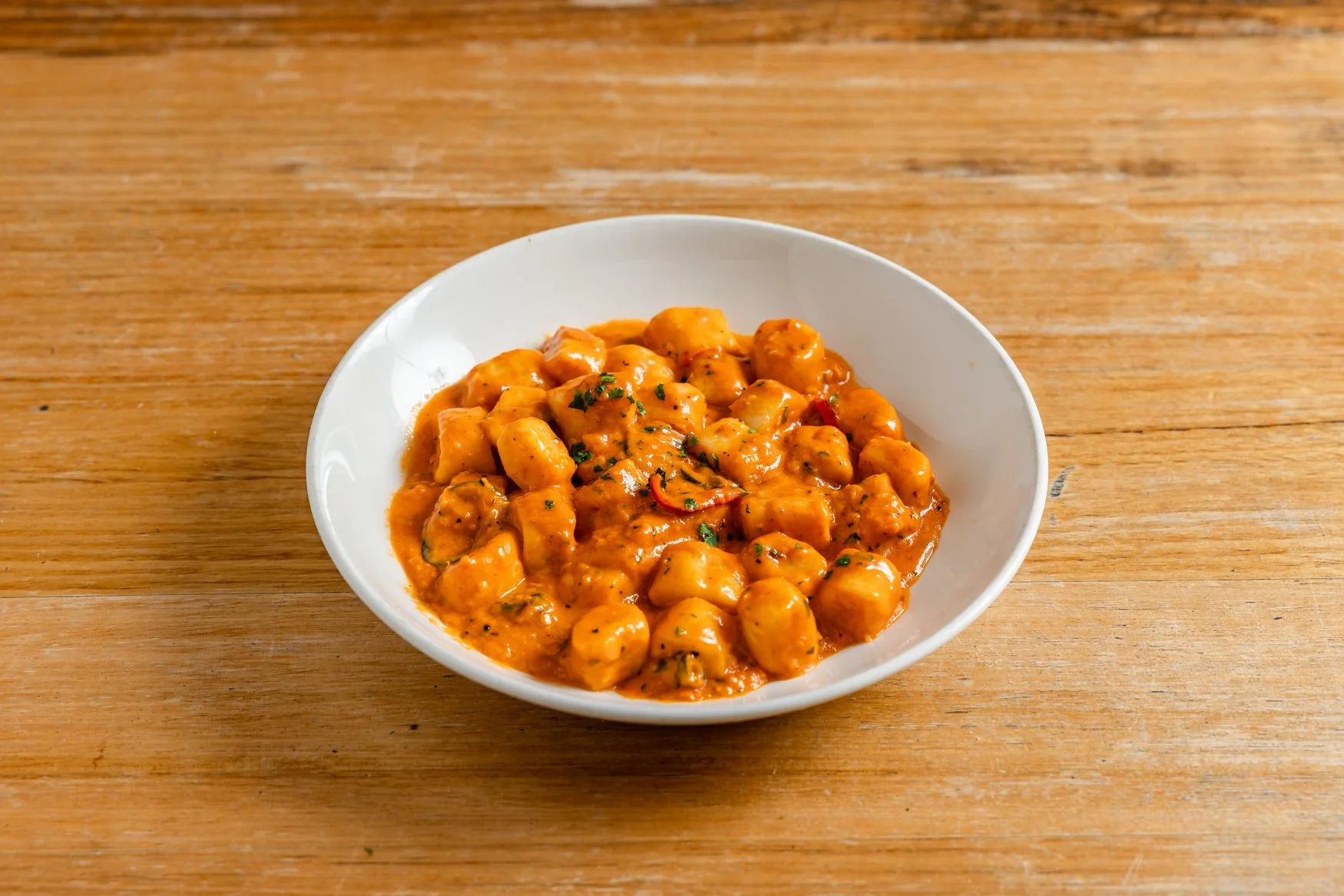
Traditional potato gnocchi begin with cooked potato pressed into a fine mash. Flour gives the dough enough structure to roll into ropes, and a little salt seasons it before the sauce is added. Cut the ropes into small pieces, leaving them smooth or rolling them over a fork. The dumplings cook briefly in water and are generally ready to lift out once they float. Use a slotted spoon to drain the water before adding the gnocchi to the sauce. Handling them gently at this stage helps preserve their shape, especially when the dough is particularly soft.
Why Potato Choice Matters for a Soft Centre
Floury potatoes work well because their flesh breaks apart easily after cooking, making the dough lighter and fluffier. Baking them in their skins helps keep the flesh dry, while boiling them whole with the skins on limits how much water they absorb. Once cooked, a potato ricer presses the flesh into fine strands so it mixes evenly with the other ingredients. Spreading the riced potato across a clean work surface lets steam escape. This small step makes homemade potato gnocchi easier to shape, particularly when the potatoes have been boiled and the flesh still feels damp.
How Flour and Egg Affect the Dough
Plain wheat flour helps the dough hold together in the cooking water. Once it comes together, extra kneading can develop the gluten and make the finished dumplings chewy. Egg can make a soft dough easier to handle and give the cooked pieces a slightly firmer bite. A practical check is to cook one piece before shaping the rest. When it holds together and feels tender when cut, the dough is ready. When it breaks apart in the water, a small addition of flour may help. Testing a single piece lets the cook adjust the batch early.
What Is Gnocchi Made From in Other Italian Recipes?
Gnocchi alla romana begin with semolina cooked in milk until it thickens. The mixture is enriched with egg yolks, spread out to cool and cut into discs. Arrange the discs in a baking dish with butter and grated cheese, then bake until the tops turn golden. Their soft centres and browned surfaces make them quite different from boiled potato dumplings, especially in a gnocchi recipe that uses flour and potatoes. Squash is another base used in Italian recipes, often found in a unique gnocchi recipe. Its gentle sweetness works well with browned butter and sage. In both cases, the choice of base shapes the dish before any sauce or garnish reaches the plate.
Two Ways to Order Gnocchi at Il Gambero
Il Gambero, a Carlton pasta restaurant on Lygon Street, lists house-made gnocchi among its pasta choices. Its Bolognese combines beef and pork for a rich, savoury pairing. The signature Il Gambero sauce offers a seafood option with tiger prawns, garlic, fresh chilli, parsley, olive oil and a little Napoli sauce. For diners choosing a lunch restaurant in Carlton, the mixed pasta platter offers another way to explore the menu. Designed for two, it includes a choice of three pasta dishes, with up to one seafood option. It lets diners compare a meat sauce with a lighter pairing in the same meal.
Frequently Asked Questions
-
A traditional version uses cooked potato, plain wheat flour and salt. The potato should be soft enough to mash evenly, and the dough needs enough flour to keep the pieces intact as they cook. An eggless dough can feel delicate when rolled, so a lightly floured work surface helps prevent sticking as you cut the pieces. For diners checking if a dish is vegan, the sauce and garnish are worth asking about separately. Butter, cream, and grated cheese can all be added during serving, even when the dough itself contains only plant ingredients.
-
A gluten-free potato version may use rice flour or a blend that replaces wheat flour with potato starch. The exact mix varies by recipe, so check packaged products by reading the ingredient list and allergen statement. At a restaurant, diners who need to avoid gluten can ask which pasta the menu refers to and how it is prepared. Il Gambero lists gluten-free penne as an option on its pasta menu. Asking about the specific shape of shaped gnocchi is useful when several pasta choices appear under the same list of sauces.
-
Ridges create shallow grooves where a fluid sauce can settle. Cooks make them by rolling each cut piece across the tines of a fork or along a ridged board. A gentle press can also leave a small hollow on the underside, giving the sauce another place to collect. Smooth gnocchi are quicker to shape and work well with sauces that already cling, such as a thick tomato sauce. When preparing either style, cutting the pieces to a similar size matters more for even cooking than making every ridge look the same.
Conclusion
What is gnocchi made from? The answer helps explain why one plate arrives as soft dumplings tossed in sauce and another as golden discs straight from the oven, showing different ways to make gnocchi. For classic potato gnocchi, the sauce often determines how rich the dish feels. Tomato brings acidity, browned butter adds a nutty flavour, and a slow-cooked meat sauce gives each bite more body. Diners who prefer some heat can look for fresh chilli in the sauce, while those after a milder plate can choose a simpler pairing. To try Il Gambero’s house-made gnocchi at 166 Lygon Street, Carlton, book a table.